Your Tech Stack Choice is Killing Your Startup. Here’s How to Launch in 14 Days Instead.
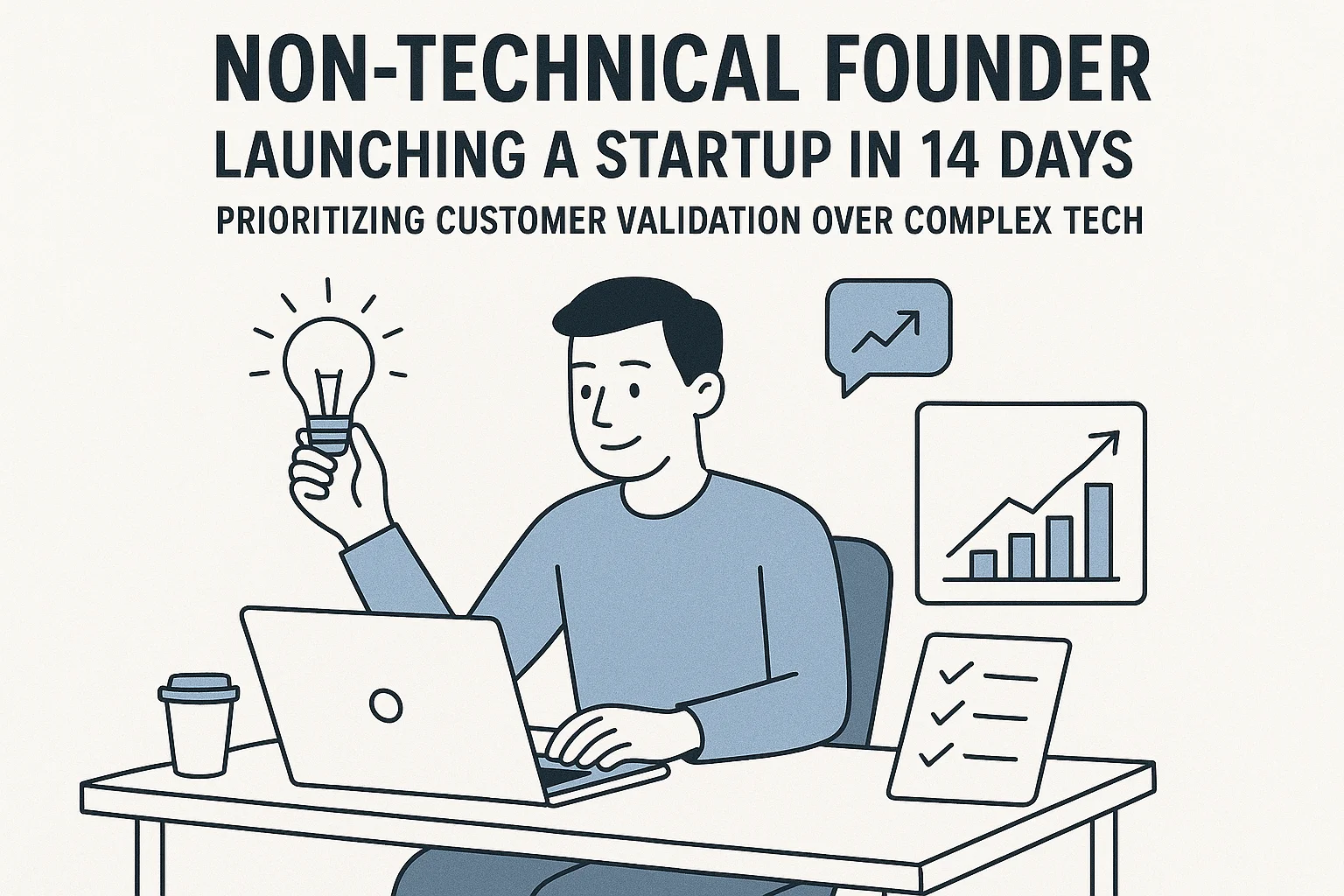
You’ve spent weeks, maybe months, trapped in the tech stack debate. React versus Vue, Node.js versus Python, a monolith versus microservices—it feels like you're making foundational decisions for a future unicorn. Many founders seek guidance on these critical choices, often delving into deep dives like Future-Proof Your Vision: Choosing the Right Tech Stack for a Scalable MVP to ensure their product's longevity. But let's be honest. This endless analysis, while seemingly strategic, is a comfortable distraction, a sophisticated form of procrastination that keeps you from the terrifying, essential task of asking a real customer for their money. The truth your first users don't care about your backend framework; they care if you can solve their problem. Arguing over technology is a way to avoid finding out if anyone actually wants what you're building. This article presents a radical alternative: stop choosing. We’ll show you how intentionally eliminating the tech stack decision is the key to escaping analysis paralysis and launching your startup in the next 14 days.
The Early-Stage Fallacy: Does Your Tech Stack Truly Matter Yet?
As a founder, you’re bombarded with advice that your initial tech stack is a make-or-break decision, one that will lock you into a path for years to come. This pressure leads to endless debates and analysis paralysis: Python vs. Node.js? React vs. Vue? You’re made to feel that this choice is as critical as your business idea itself.
Let’s be direct: in the pre-product-market-fit stage, this is a fallacy. The belief that you must select the perfect, infinitely scalable foundation from day one is a trap. You are not Google preparing for a billion users; you are a startup trying to find your first ten paying customers.
Obsessing over frameworks is a comfortable distraction from the terrifying, essential work of validating your idea in the real world. Every week spent debating technology is a week you aren’t learning from users—and a week closer to running out of cash. The biggest risk you face isn’t choosing the “wrong” stack; it’s burning through your runway to build a technically elegant solution for a problem nobody has.
The only question that matters right now is: “What is the absolute fastest path to getting a functional product in front of a customer to see if they will pay for it?” Your first users won’t care about your code; they only care if you solve their problem. For insights on achieving this rapidly, consider resources like The Fastest Way to Build a Production-Ready MVP in 2025: Top Tools & Strategies.
The Hidden Costs of Cutting-Edge: Why Novelty Kills Velocity
That shiny new framework everyone on Twitter is raving about promises unparalleled performance and a revolutionary way to build. It feels like the secret weapon that will put you lightyears ahead of the competition. But for an early-stage startup, chasing the cutting-edge is a trap, and its novelty comes with severe hidden costs that directly sabotage your speed.
First, you’re venturing into uncharted territory. There are fewer proven solutions, sparse documentation, and a smaller community to ask for help when things inevitably break. Your developers end up wasting precious days solving problems that were solved a decade ago in more mature technologies. Second, finding talent becomes a nightmare. The pool of developers proficient in a brand-new technology is tiny, making hiring slow, competitive, and incredibly expensive. Finally, new tools are often less stable, introducing bugs that can cripple your product and erode the trust of your first, most critical users.
Every hour your team spends debugging a niche library is an hour they’re not building features that solve your customers’ problems. The debate over the ‘perfect’ stack becomes a convenient distraction from the only thing that matters: getting a working product into users' hands to see if they’ll pay for it. The choice isn’t between ‘good’ and ‘bad’ technology; it’s between being a tech pioneer and being a founder who ships.
The Talent Trap: How Specific Tech Choices Shrink Your Hiring Pool
That obscure, cutting-edge framework your technical advisor is excited about? It’s a hiring nightmare waiting to happen. As a founder, your first technical hire is a monumental decision, but choosing a niche technology stack dramatically shrinks the pool of qualified candidates you can draw from. Suddenly, you’re not just looking for a great engineer; you’re hunting for a unicorn who knows a specific, trendy language—and you’re competing with deep-pocketed tech giants for them.
This creates a cascade of problems. The hiring process takes months longer than it should, draining your time and focus. When you do find someone, their salary expectations are often inflated due to scarcity. And what happens if that one specialist leaves? You’re back to square one, struggling to find a replacement who can even understand the codebase.
Conversely, by opting for a well-established, even “boring,” technology, you gain immediate access to a massive global talent pool. Finding experienced developers becomes faster, more affordable, and less risky. Your priority isn't to build a technically novel masterpiece; it's to validate a business idea with paying customers. Choosing a technology that allows you to build a team quickly and efficiently is a core business decision, not a technical one. Don't let your tech stack become a self-imposed hiring bottleneck.
Embracing the "Boring": The Unsung Heroes of Rapid Development
The tech world loves the new and shiny. But for a founder, chasing the “next big thing” in technology is a trap. It promises innovation but delivers risk, delays, and distraction from your primary goal: validating your idea. The real competitive advantage isn't found in a niche framework; it's found in speed.
This is where “boring” technology shines. Well-established tech stacks—the ones that have powered successful companies for years—are predictable and robust. Every common problem has been encountered and solved a thousand times over, with solutions and documentation readily available. This stability extends to your team. The talent pool is vast and accessible, meaning you can find skilled developers quickly without paying a premium for niche expertise. You aren't searching for a needle in a haystack; you're hiring from a field of proven experts.
Most importantly, boring tech is built for rapid execution. It offers a massive library of pre-built components for everything from user authentication to payments. Instead of inventing from scratch, your team assembles proven parts, slashing development time from months to weeks. This isn’t about making a technical compromise; it’s a strategic business decision. It frees you from the distraction of engineering debates and allows you to focus on the only thing that matters: getting your product in front of customers.
Speed Over "Best": Prioritizing Launch Velocity for Validation
The search for the “perfect” tech stack is a dangerous form of procrastination. For an early-stage founder, this debate is often a distraction from the only question that matters: “Will customers actually pay for my solution?” Every hour spent researching frameworks or debating scalability is an hour you’re not getting an answer. The real risk isn’t picking a suboptimal technology; it’s building a perfect solution to a problem nobody has.
So, should you prioritize speed and execution over finding the “best” technology? Absolutely. Your first product is not your final product. It is an experiment designed to generate one crucial piece of data: market validation. This rapid, focused approach is exemplified by concepts like Quick MVP Development for Startup Validation: The 2025 Blueprint. A functional, “good enough” product that launches in two weeks is infinitely more valuable than a technically flawless one that takes six months to build.
Launch velocity is your greatest competitive advantage. It shortens the time between your idea and real-world feedback, allowing you to iterate or pivot based on actual customer behavior, not on technical assumptions. The goal is not to build an elegant, infinitely scalable architecture from day one. The goal is to get a working product into the hands of paying customers as fast as humanly possible. By focusing on launch velocity, you shift your energy from a technical debate to the business activity that will ultimately determine your survival.
The Opportunity Cost of Perfection: What You Lose by Not Launching
While you debate the merits of React versus Vue, your startup is bleeding its most valuable asset: time. Every week spent chasing the “perfect” architecture is a week you're not getting crucial feedback from real users. This isn't just a delay; it's an opportunity cost with compounding interest. You’re trading tangible data—what customers want and will pay for—for a theoretical ideal that exists only on a whiteboard.
Meanwhile, a competitor with a “good enough” solution is already in the market. They are capturing early adopters, learning from user behavior, and building momentum. They are iterating based on real feedback, while you are still debating frameworks. The market doesn't wait for perfect code; it rewards speed and responsiveness.
Let’s be honest: the obsession with technical perfection is often a convenient distraction from the scariest part of building a business—finding out if anyone will actually pay you. The greatest risk you face is not choosing the wrong technology. It's building a beautiful, scalable product that absolutely no one needs. A flawless tech stack for a failed idea is worthless. The only way to know if you're on the right track is to launch.
Decoupling Tech Choice from Your 14-Day Launch Goal
Let's be honest: the deep dive into React vs. Vue or Node.js vs. Django feels productive, but it’s a form of high-level procrastination. It’s a distraction from the only question that matters right now: will someone pay for this? The "perfect" tech stack is an illusion that keeps you from finding the answer. Your first customers won't care if your backend is built on Ruby on Rails or Python; they only care if your product solves their problem.
This is why we argue that the single most effective way to guarantee a rapid launch is to take the technology choice off the table completely. This often means embracing a strategy like adopting a minimum viable tech stack for a $5k mvp, ensuring the decision is already made for you. Imagine using a proven, reliable stack chosen for one reason: speed to market. This isn't about limiting your options; it's about liberating your focus. Instead of spending weeks in analysis paralysis, you spend that time talking to users, refining your offer, and planning your go-to-market strategy.
The 14-day launch isn’t a magic trick. It's the direct result of removing the biggest bottleneck—endless technical deliberation. By decoupling your idea from a specific technology, you commit to validation over engineering perfection. You stop building for a hypothetical future and start selling to a real customer, today.
Minimal Viable Product: Building for Customers, Not Conferences
It’s easy to get seduced by the fantasy of presenting your flawless, scalable architecture at a tech conference. Founders dream of building a product so technically elegant that other engineers will admire it. But here’s the blunt truth: your first ten customers do not care if you’re using Kubernetes, serverless functions, or the hottest new JavaScript framework. They care about one thing: does your product solve their painful, urgent problem?
The "V" in Minimal Viable Product stands for Viable, not Visionary. Its purpose isn't to be a technical masterpiece; it's to be the fastest, cheapest experiment you can run to answer the only question that matters: "Will people pay for this?" Every decision, especially your tech stack, must serve that singular goal. The code is simply the vehicle for the test, not the test itself.
Choosing a complex or trendy stack is a classic avoidance tactic. It makes you feel productive while you delay the terrifying moment of asking someone to actually pay you. Stop building a solution worthy of a keynote speech and start building one that's worthy of a customer’s credit card. The goal isn’t to launch a perfectly engineered system; it's to launch a conversation with the market.
The Power of No-Code/Low-Code: Accelerating Without Engineering Overhead
What if you could build and launch your core product without writing a single line of code or hiring an expensive engineering team? This isn’t a hypothetical; it's the reality of no-code and low-code platforms. For a non-technical founder, this is your ultimate shortcut to market validation, enabling you to build and launch your startup faster and cheaper, as detailed in guides like How to Build an MVP with No-Code Tools: Launch Your Startup Faster & Cheaper. Instead of getting paralyzed by debates over programming languages and database structures, you can visually build functional applications, user flows, and payment systems in a fraction of the traditional time.
This approach fundamentally shifts your focus from how you build to why you build. It directly answers the question of whether you should prioritize speed over the "perfect" technology—the answer is a resounding yes. Your first goal isn't to create a technically elegant masterpiece; it's to prove that a customer will pay for your solution. No-code tools are purpose-built for this exact stage. They demolish the engineering overhead and hiring costs that sink most early-stage ventures, allowing you to launch, gather crucial user feedback, and secure your first revenue. You’re no longer held hostage by a technical backlog or a developer’s schedule. You are in complete control of your timeline, able to test, iterate, and respond to your market with unmatched agility. This isn't about avoiding technology; it's about using the smartest technology to get to customer validation faster than anyone else.
Your Tech Stack is a Tool, Not Your Strategy: Focus on Business Validation
It’s easy to mistake a technical blueprint for a business strategy. Founders spend weeks, even months, agonizing over frameworks and databases, believing this single decision will determine their startup’s fate. This is a dangerous and expensive illusion. Your tech stack is not your product, nor is it your strategy—it’s just a tool. Its sole purpose in the beginning is to answer the most critical question: will anyone pay for what you’re building?
Think of it this way: if you’re digging for gold, do you spend a month designing the perfect shovel, or do you grab a sturdy one and start digging? Every hour you spend debating Node.js vs. Python is an hour you’re not talking to a potential customer. Every debate over React vs. Vue is a delay in validating your core business assumption.
Your strategy isn't about code; it's about customers. The goal is to get a working product into the market as quickly as possible to see if it solves a real problem for real people. Your first ten customers won't ask about your backend architecture. They will only care if your solution makes their life better. Stop optimizing for a hypothetical future and start building for the immediate need: validation. The "right" technology is whichever one gets you to your first paying customer the fastest.
Stop Debating, Start Doing: Launch Your Vision, Not Just Your Code
Ultimately, the debate over the perfect tech stack is a dangerous distraction. It’s a form of productive procrastination that prioritizes technical elegance over market validation, costing you your most valuable assets: time and momentum. The central lesson is to ruthlessly prioritize speed. Instead of architecting for a million users, build an MVP for one. Leverage familiar frameworks, no-code platforms, or the simplest tools available to solve the core problem and get your product into users' hands.
So, close the comparison articles and silence the debates. The challenge isn't finding the ultimate stack; it's shipping a solution. For a practical guide on achieving rapid deployment, consider a blueprint like How to Launch Your App MVP in Under a Month: The 2025 Blueprint. Stop planning and start building. Your first customers are waiting for you to solve their problem, not for you to write flawless code.
Stop letting endless tech debates kill your startup's momentum—learn how we guarantee your launch in 14 days. Book your free project consultation today.

Børge Blikeng
AuthorHelping startups build successful MVPs for over 5 years