How to Define Scope for an MVP Project: The Ultimate Guide
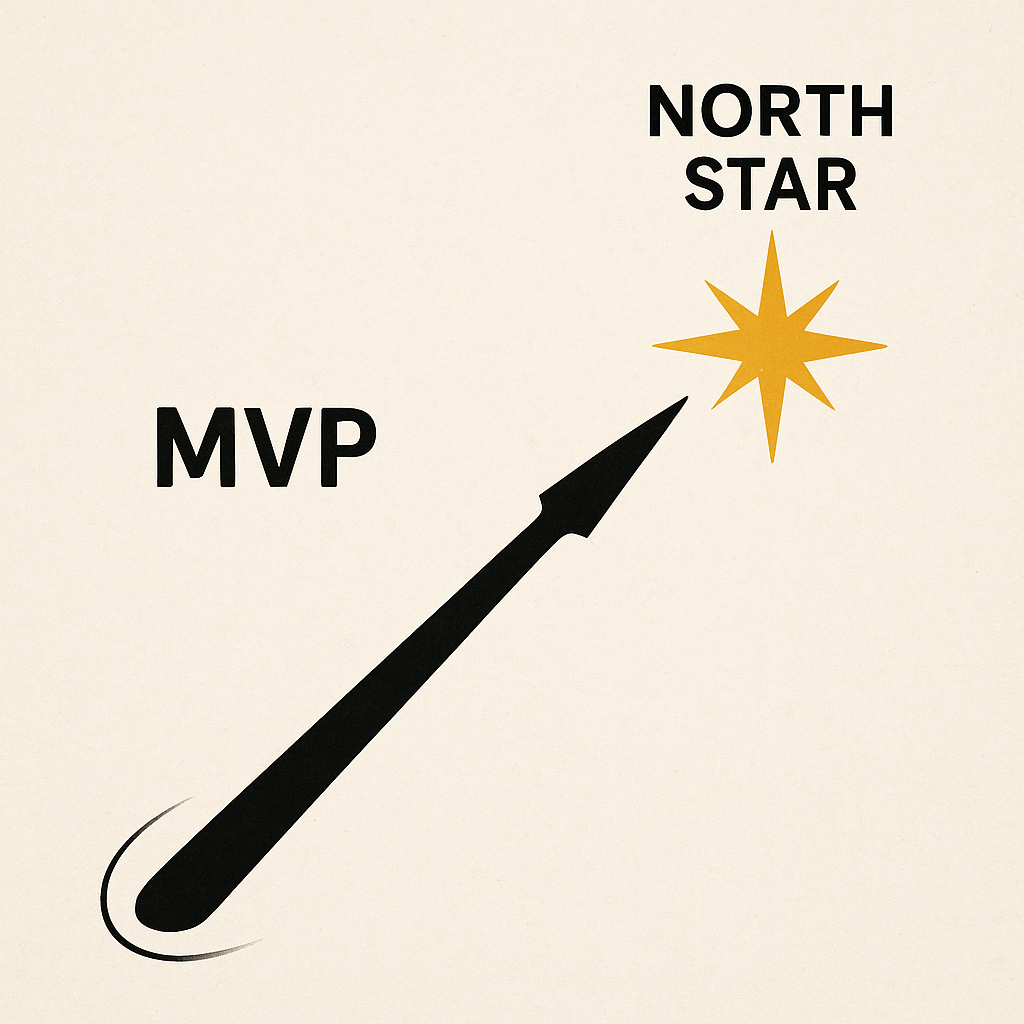
Introduction: Why Defining MVP Scope is Your Project's North Star
Understanding MVP: What it is and what it isn't
Let's clear the air. A Minimum Viable Product isn't a buggy prototype or simply the cheapest version of your final app. It's a strategic tool designed for one primary purpose: to learn.
At its core, an MVP must be Viable. It has to solve a real, painful problem for a specific user group. It should be a polished, production-ready product that delivers genuine value, even if that value is extremely focused. Think of it as a sharp scalpel, not a blunt instrument.
The Minimum part is where most founders get trapped. It’s not about building a long list of "nice-to-have" features. It's an exercise in ruthless prioritization. An MVP is the smallest possible experiment that allows you to test your most critical business assumption in the real world.
Too many great ideas die in an endless development cycle, burning cash and time on features built on speculation. The MVP philosophy rejects this. It is a calculated move to get to market incredibly fast, providing certainty by trading assumptions for real user data. It isn't your final product; it's the starting line for building a product people actually want and will pay for.
Why Scope Definition is Crucial for MVP Success
Failing to define a clear, tight scope is the single most common reason promising app ideas never see the light of day. It’s the point where enthusiasm gets bogged down in the dreaded "endless development cycle." Without a firm finish line, projects become vulnerable to scope creep—the slow, continuous addition of "just one more feature" that inflates timelines and demolishes budgets. This uncertainty is a startup killer.
Proper scope definition is your defense mechanism. It transforms a vague idea into a concrete build plan with a non-negotiable set of core features. This isn't about limiting your vision; it's about focusing it. The goal is to ruthlessly prioritize the absolute minimum required to test your core business assumption with real users. Does this feature directly solve the primary problem for your first customers? If not, it gets cut for now.
This disciplined approach provides two critical advantages. First, it creates certainty. A fixed scope allows for a predictable timeline and budget, eliminating the financial anxiety that plagues most development projects. Second, it unlocks speed. By building only what is essential, you can launch in a fraction of the traditional time, gathering invaluable market feedback while competitors are still stuck in planning meetings.
Step 1: Clearly Define Your Core Problem and Target Audience
Before you sketch a single screen or write a line of code, you must achieve ruthless clarity on two fronts: the one critical problem you are solving and the specific person who has it. This isn't a vague brainstorming exercise; it's a strategic imperative that separates successful launches from expensive failures.
Start by articulating the problem in a single, powerful sentence. For example, "New parents lack a reliable way to find and book vetted babysitters at the last minute." This statement becomes the north star for your entire project.
Next, define your initial target audience—your "beachhead" market—with surgical precision. "Everyone" is not an audience. "Parents" is too broad. "First-time parents in urban areas, aged 28-35, who both work full-time" is a group you can actually find and understand.
This laser focus is your primary defense against the feature bloat that derails timelines and budgets. Every subsequent decision must pass a simple test: "Does this feature directly help our specific user solve their core problem?" If the answer isn’t a resounding yes, it doesn't belong in your MVP. Getting this right is the foundation for speed; it prevents you from wasting months building a beautiful solution to a problem nobody has.
Step 2: Brainstorm All Possible Features and Distinguish Core from Non-Core
With your primary problem defined, it's time for a "blue sky" brainstorming session. Get your entire vision down on paper—every feature, user flow, and "wouldn't it be cool if" idea you can imagine. This is your dream version of the product. Now, prepare for the most critical step: ruthless prioritization.
This is where most projects stall, drown in complexity, and burn through cash. Your goal is not to build your dream app; it's to build a business. To do that, you must identify the single, indispensable user journey that validates your core assumption.
Divide your feature list into two uncompromising columns: "Must-Have" and "Version 2.0." The only question to ask for each feature is: "Can my very first user solve their primary problem without this?" If the answer is yes, it moves to the V2 list. Be brutally honest. Features like "dark mode," "social sharing integrations," or "advanced analytics dashboards" are almost never essential for launch.
Every feature you add to your MVP is another week you aren't getting feedback and another dollar spent on an unproven assumption. A lean scope isn't a compromise; it's a strategic weapon. It’s the fastest path from an idea to a real product in the hands of real users.
Step 3: Master Prioritization Techniques (MoSCoW, KANO, Value vs. Effort)
Once you have a long list of potential features, the real work begins: ruthless prioritization. This isn’t just about organization; it’s the critical step that separates a focused, fast-to-market MVP from a bloated project doomed to the endless development cycle. Without it, you risk building features nobody wants, burning through your budget and timeline.
Start with the MoSCoW method (Must-Have, Should-Have, Could-Have, Won't-Have). Be brutally honest. A true MVP is composed almost entirely of Must-Haves. Everything else is noise that creates delays. Your "Won't-Have" list is your most powerful tool for protecting your launch date and budget.
Next, use a Value vs. Effort Matrix for a tactical advantage. Plot each feature based on the user value it delivers versus the development effort it requires. Your MVP scope is the collection of features in the "High Value, Low Effort" quadrant. This is how you gain an unfair advantage—delivering maximum impact while competitors are still debating complex, high-effort features. The KANO model also helps by clarifying which features are basic expectations versus "delighters." For a first launch, nail the basics first.
Mastering these frameworks provides the certainty needed to build and launch with speed, getting you crucial user feedback while others remain stuck in planning.
Step 4: Set Measurable Success Metrics for Your MVP
An MVP is an experiment, and every good experiment needs a clear way to measure its outcome. Without metrics, you’re not validating a business hypothesis; you’re just launching a product and hoping for the best. Success isn't defined by the number of features you ship, but by whether you can prove your core assumption with real user data.
Move beyond vanity metrics like total downloads or sign-ups. Instead, focus on the one or two key performance indicators (KPIs) that prove users are getting tangible value. For a social networking app, this might not be "profiles created," but rather "percentage of new users who make their first connection within 24 hours." This single metric reveals if people understand and engage with your app's core purpose.
Defining this target number before a single line of code is written is your most powerful defense against feature creep and delays. Every proposed feature must answer a simple question: "Will this directly and significantly impact our primary success metric?" If the answer is no, it’s noise. This ruthless focus is what separates projects that launch and learn in weeks from those stuck in development for months, burning cash while chasing unproven assumptions. Your goal isn't a perfect product; it's a fast, data-driven answer.
Step 5: Documenting Your MVP Scope Effectively (User Stories, Acceptance Criteria)
A great idea without clear documentation is a recipe for disaster. This is where countless projects get derailed, leading to endless back-and-forth, blown budgets, and fatal delays. To avoid this trap, you must translate your prioritized features into crystal-clear instructions. The gold standard for this is the User Story format.
A user story is a simple, non-technical sentence: "As a [user type], I want to [action], so that [benefit]." This format forces you to justify every feature from the user's perspective, acting as a final check against feature bloat.
But a story alone isn't enough. Each one needs concrete Acceptance Criteria—a simple checklist that defines "done." For example:
User Story: As a shopper, I want to add an item to my cart, so that I can purchase it later. Acceptance Criteria:
- Clicking "Add to Cart" increases the cart icon's count by one.
- The item appears in the cart view.
This level of clarity isn't just for developers; it's for you. It transforms abstract ideas into a fixed, actionable blueprint, eliminating the ambiguity that kills momentum and creates budget uncertainty. It’s the final step in locking down a scope you can build quickly and confidently.
Common Pitfalls to Avoid When Defining MVP Scope (Scope Creep, Gold Plating)
Even with a clear initial plan, two silent killers can derail your MVP: scope creep and gold plating. Scope creep is the gradual addition of "just one more feature" after the project has started. Gold plating is the temptation to over-engineer or perfect a feature beyond what’s required for initial validation. Both stem from the fear that your product won't be "good enough" at launch.
This fear is a trap. It’s what turns a lean, fast project into a months-long marathon that burns through your runway. Every unplanned feature and every unnecessary polish pushes back your most critical milestone: getting real user feedback. The goal of an MVP isn't to build a perfect, all-encompassing product. Its purpose is to get a working solution into the market to validate your core business assumption as quickly as possible.
The antidote is disciplined exclusion. For every feature, ask one ruthless question: "Can we validate our core hypothesis without this?" If the answer is yes, it must be cut and moved to a future backlog. This isn't about building a weaker product; it's about building a smarter one. It prioritizes speed and learning over speculation, giving you the certainty you need to invest further, pivot, or stop before you’ve wasted valuable time and capital.
Communicating and Validating Your MVP Scope with Stakeholders
Presenting your tightly defined MVP scope to stakeholders can feel like walking into a minefield. Investors, advisors, and co-founders will naturally push for their own "critical" features. This is a pivotal moment: your ability to hold the line here determines whether you launch in weeks or get trapped in development for months.
The key is to reframe the entire conversation. You are not presenting a final product blueprint; you are proposing a surgical experiment designed for maximum learning with minimum build time. When a stakeholder suggests a new feature, resist the urge to debate. Instead, validate their idea ("That's a great thought for V2") and immediately move it to a "Post-Launch" backlog. This respects their input without sacrificing the timeline or budget certainty.
Focus the discussion on the outcome, not the feature list. Ask, "Does this scope allow us to validate our primary business assumption in the shortest time possible?" Getting unified agreement on this question is non-negotiable. It’s what provides the project with a fixed target, protecting it from the scope creep and speculative debates that kill promising ideas before they ever have a chance to face a real user.
The Iterative Nature: What Comes After Your MVP Launch
Think of your MVP launch not as the finish line, but as the starting gun for the real race. This is where your strategy shifts from building based on a hypothesis to iterating based on hard evidence. The post-launch phase is a disciplined cycle of "Build-Measure-Learn," fueled by the single most valuable asset a new venture can possess: real user data.
Your first users are a focus group that you don't have to pay for. Every interaction, support ticket, and piece of feedback is a guidepost. Your task is to analyze this data relentlessly. What are the common drop-off points? Which core feature is getting the most engagement? This intelligence allows you to ruthlessly prioritize what comes next, killing the feature bloat that sinks so many startups.
This iterative approach prevents you from falling into another prolonged and costly development cycle. Instead of speculating on a V2, you can execute short, targeted sprints to deliver features your users are actively demanding. This is the core advantage of speed. While competitors are still stuck in planning meetings, you are already building a product that the market is pulling from you. Every subsequent development decision is now de-risked, ensuring your time and capital are spent building what truly matters.
Conclusion
Conclusion: Launch Smart, Learn Fast, and Iterate for Growth
Tired of endless scope discussions? Get your production-ready MVP in 14 days for a fixed $4,990. Book your free project consultation today.

Børge Blikeng
AuthorHelping startups build successful MVPs for over 5 years