The Founder's How-To Guide to A/B Testing: Validate Your MVP Features and Launch with Confidence
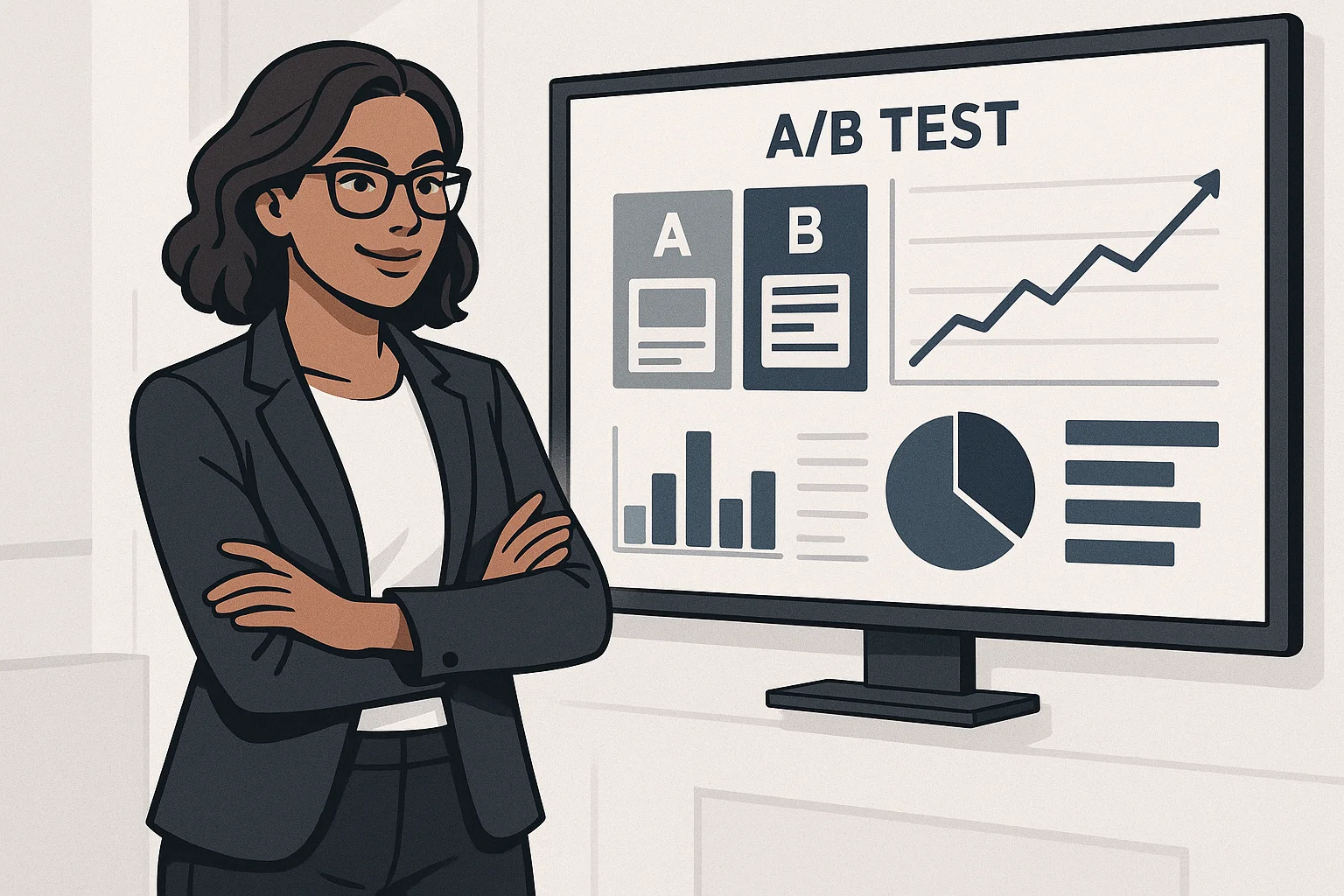
The Founder's Dilemma – Building an MVP on Assumptions vs. Data-Driven Validation
Every founder knows the feeling: you have a game-changing MVP idea, but you’re trapped in the endless development cycle, debating features and burning through cash on gut feelings alone. For those looking to accelerate their initial launch, resources like MVP Development For Startups: Launch in 14 Days for a Fixed $4,990 offer rapid deployment. However, beyond just launching, it's crucial to stop guessing and start validating. A/B testing is your secret weapon to break this pattern, turning risky assumptions into data-backed certainties. This practical, how-to guide is designed specifically for non-technical founders and product managers. We’ll provide a step-by-step framework to quickly and efficiently test your core feature ideas before committing expensive developer resources. You’ll learn how to de-risk your product roadmap, build what users truly want, and finally launch your MVP with the unshakable confidence that comes from real data.
Why A/B Testing is Your MVP's Secret Weapon: De-Risks Launch and Accelerates Growth
Launching an MVP on a gut feeling is one of the biggest gambles a founder can make. You invest precious time and capital into a feature, only to discover users don’t understand, want, or value it. This is where A/B testing becomes your unfair advantage. It transforms your launch from a high-stakes bet into a calculated, data-informed move, effectively ending the cycle of building in the dark.
At its core, A/B testing allows you to battle-test your most critical assumptions with real users before you commit to expensive development. Instead of asking your team, “Will this feature work?”, you can present two versions of a feature (or even just a landing page headline) to different user segments and let their behavior provide the definitive answer. This evidence-based approach directly de-risks your investment by ensuring you’re building a solution grounded in reality, not just your vision. For a structured approach to post-launch validation, a valuable resource is The 14-Day Post-Launch Plan: How to Validate Your MVP with Real Users, which details how to gather crucial real-world feedback.
Furthermore, this process dramatically accelerates your path to product-market fit. By systematically identifying what truly resonates with your target audience—which call-to-action converts, which user flow drives engagement—you stop wasting resources on dead-end ideas. Each winning test provides a clear signal, creating a validated roadmap for future development. You build momentum by shipping features you already know your users want, allowing you to launch with the confidence that your MVP is already on the right track.
The Lean A/B Testing Framework for Founders: An Overview of the MVP Process
To escape the costly cycle of building features nobody wants, you need a lean process that prioritizes learning over shipping code. This framework transforms A/B testing from a complex engineering task into a founder’s strategic tool for rapid validation, offering a repeatable loop to de-risk your MVP one core assumption at a time. For a deeper dive into modern validation techniques, consider consulting resources like The 2025 Playbook: Essential User Testing Strategies for Your New MVP. By following these steps, you can make data-driven decisions that save time and money, ensuring you build what customers will actually use.
Here’s the process:
- Formulate a Testable Hypothesis. Start with a clear, simple statement: "We believe that [implementing feature B] for [our target users] will result in [a specific, measurable outcome, like a 15% increase in sign-ups]." This forces you to define what success looks like before you build anything.
- Create a Minimum Viable Test. Don’t build two full versions of your product. For an MVP, the "test" can be as simple as two different landing pages, user-flow mockups, or even "Wizard of Oz" prototypes where you manually fulfill the feature's function behind the scenes. The goal is maximum learning with minimum effort.
- Run the Experiment & Gather Data. Direct a segment of your early users or target audience to each version. Let the test run until you have enough data to make a statistically significant decision—don't end it prematurely based on a gut feeling.
- Analyze and Decide. Did your variation outperform the control? The data gives you a clear directive: build the winning feature with confidence, iterate on the idea with new insights, or discard it and avoid wasting valuable development resources.
Step 1: Defining Your Hypothesis & Success Metrics for Core MVP Features
Before you test anything, you must know what you're trying to prove and what success looks like. This is your hypothesis—a clear, testable statement that turns a core assumption into a structured experiment. Without it, you're just guessing, and guessing is the fastest way to waste time and money in the development cycle. This structured approach to testing is a critical component of any efficient MVP development process, ensuring that every step contributes to a successful launch, much like the methods outlined in MVP Development Process Steps: The Guaranteed 14-Day Launch System.
A strong hypothesis is your guide. Frame it simply: "If we implement [THE CHANGE], then [A SPECIFIC USER BEHAVIOR] will happen, because [THE REASON]." For example: "If we add a simplified, one-click checkout option to our e-commerce MVP, then the cart abandonment rate will decrease by 20%, because it removes friction at the point of purchase."
This statement immediately defines your primary success metric: cart abandonment rate. A great test also tracks secondary metrics, like average time to checkout or sales conversion rate, to understand the full impact. These non-negotiable numbers provide a clear verdict on whether the feature is a "go" or a "no-go."
Use this simple template to structure your thinking for every core feature you want to validate:
My MVP Feature Hypothesis
- We believe that: Implementing [Your Core Feature Idea].
- For: [Your Target User Segment].
- Will result in: [A Specific, Measurable Outcome].
- We'll know this is true when we see: [A % increase/decrease in a Key Metric like conversion, engagement, or retention].
Getting this step right is non-negotiable. It ensures your A/B test delivers an actionable answer, not just ambiguous data.
Step 2: Designing Your MVP A/B Test: Crafting Effective Variations
With your hypothesis defined, it’s time to create the contenders for your test. This isn't about making random changes; it’s about strategically designing a challenger (the "variation" or Version B) to compete against your current version (the "control" or Version A). The golden rule is to isolate one key variable per test. If you change the headline, the button color, and the main image all at once, you’ll have no idea which change actually influenced the result.
For an MVP, focus on variations that test your core assumptions about user motivation and behavior. Don't get bogged down testing minor button shades. Instead, test high-impact elements that could make or break your user journey.
Here are some effective variation ideas for an MVP:
- Value Proposition: Test two different headlines that communicate your product's core benefit.
- Control: "AI-Powered Project Management"
- Variation: "Finish Your Projects 2x Faster"
- Call-to-Action (CTA): Test the language that drives your primary conversion.
- Control: "Sign Up"
- Variation: "Get Started for Free"
- Feature Discovery: Test the prominence or description of your MVP's killer feature to see if it increases engagement.
By creating simple, focused variations, you get clean, unambiguous data. This clarity is your fastest path to knowing what users truly want, allowing you to stop guessing and start building features with validated demand.
Step 3: Implementing and Launching Your Test: Non-Technical Setup for Founders
With your hypothesis and metrics defined, it’s time to bring your A/B test to life. The great news? You don't need a developer. Modern A/B testing platforms, much like the principles discussed in resources like No-Code MVP: The Founder's Guide to Building (And Knowing When to Stop), are designed for non-technical founders. They utilize visual editors that feel more like using a simple website builder than coding, allowing you to escape the development queue and start gathering real-world data fast.
Platforms like Optimizely, VWO, or HubSpot's testing features operate on a simple principle: you add a small, one-time code snippet to your site (a task that often takes minutes), and you gain full control. From there, the process is straightforward and code-free.
Here’s a typical non-technical setup workflow:
- Install the Snippet: Copy and paste the provided JavaScript snippet into your website's header. Most website builders or CMS platforms have a simple field for this.
- Create Variations with a Visual Editor: Open your page in the tool’s editor. Click on any element—a headline, a button, an image—and change it. Type new copy, change the color, or hide an element entirely for your "B" version.
- Set Your Conversion Goal: Tell the tool what success looks like. This is usually as simple as clicking on your primary call-to-action button or specifying a "thank you" page URL that users land on after converting.
- Launch the Test: Set the traffic allocation (usually 50% to your original and 50% to your variation) and click "start." Your test is now live, gathering invaluable data from real users.
Step 4: Analyzing Your Results: Turning MVP Data into Actionable Insights
The data is in, but raw numbers don’t build a product. This is the critical moment where you translate test results into a confident decision, saving you from wasting precious development resources. The goal isn't just to find a winner; it's to gain clarity and direction.
First, determine if your results are statistically significant. In simple terms, this means you can be confident the outcome wasn't a random fluke. Most A/B testing tools will calculate this for you, often showing it as a "confidence" or "significance" percentage. Don’t proceed without a high level of confidence (typically 95% or more).
Once you have a reliable result, your path forward becomes clear. Use this simple decision-making framework:
- Decisive Win: Your new feature (Variation B) clearly outperformed the control. This is a green light. You have data-backed validation that users want this. Move forward with building the full feature, knowing you're on the right track.
- Clear Loss: The new feature performed worse than or equal to the control. This is also a huge win! You’ve just avoided sinking time and money into an idea that doesn't resonate with users. Scrap the feature and focus your energy elsewhere.
- Inconclusive: The results are too close to call. This tells you the change wasn't impactful enough to matter to your users. Re-evaluate the core problem you were trying to solve—your hypothesis may have been off.
Best Practices for Rapid MVP Feature Validation: Speed, Efficiency, and Focus
To validate MVP features without getting stuck in a development loop, speed and focus are your greatest assets. For a comprehensive guide on achieving rapid startup validation, refer to Quick MVP Development for Startup Validation: The 2025 Blueprint. Within this agile approach, A/B testing isn't about perfection; it's about getting clear signals quickly. Follow these best practices to make every test count and turn assumptions into data-backed decisions.
- Test One Variable at a Time: Resist the urge to change a headline, button color, and image all at once. Isolating one variable gives you a clear, unambiguous result about what change drove the user behavior.
- Focus on Your Riskiest Assumption: What feature or user action is most critical to your MVP's success? Test that first. Validating your core value proposition early saves immense time and resources down the line.
- Define Your 'Win' Metric Upfront: Know exactly what success looks like before you start. Is it a higher click-through rate, more form submissions, or increased user engagement? A clear goal prevents misinterpretation.
- Aim for Statistical Significance: Testing on a handful of users is misleading. While you don’t need massive traffic, use an A/B test calculator to ensure you have enough data to trust the outcome.
- Run Tests Long Enough: Don't declare a winner after a few hours. Let tests run for at least a week to capture natural variations in user behavior between weekdays and weekends.
- Segment Your Results: Look at how different groups react. Did the change appeal more to new visitors than returning customers? Segmentation often uncovers key insights.
- Commit to the Winner and Move On: The purpose of testing is to make a decision. Once you have a clear winner, implement the change and move on to your next validation challenge.
Effective Strategies for Testing Core MVP Functionalities
Validating your MVP's core isn't just about minor tweaks; it's about confirming your entire value proposition before you over-invest in development. To effectively learn How to Validate Your MVP Idea Before Development, consider these strategies that use the principles of A/B testing to validate demand with minimal code, helping you build with data-backed confidence.
- The "Fake Door" Test: This is the ultimate test of user intent. You add a button or link for a feature that doesn't exist yet. When a user clicks, you track that click as a sign of interest and display a message like "Coming Soon! Sign up to be notified." The click-through rate is your validation metric. If nobody clicks, you’ve just saved yourself weeks of development.
- The "Wizard of Oz" Test: Create the illusion of a fully functional, automated feature while you manually handle all the work behind the scenes. For example, if you're testing an AI-powered recommendation engine, you could have a human manually curate the recommendations for your first users. This allows you to test the feature’s value and user experience before writing a single line of complex code.
- Value Proposition Landing Page Test: Before you even have a product, create two landing pages (Version A and Version B). Each page describes your MVP but emphasizes a different core benefit or targets a slightly different pain point. Drive traffic to both and measure which version gets more email sign-ups. This validates your core marketing message and user-problem fit from day one.
The Founder's Toolkit: Top A/B Testing Platforms for MVP Development
Choosing your A/B testing tool doesn't have to be another roadblock. For your MVP, the goal isn't to find the most complex platform, but the one that delivers clear, actionable insights the fastest. You need a tool that supports rapid iteration, not one that requires a dedicated engineer to manage. As a founder, your focus should be on speed-to-learning, and sometimes focusing on the wrong metrics or specific costs can distract from this, as highlighted in The $5,000 MVP Tech Stack? You're Asking the Wrong Question..
Many modern platforms are designed specifically for non-technical users, featuring visual editors and simple installations that let you launch tests in minutes, not weeks. Your choice should align with your budget, technical comfort level, and the primary question you're trying to answer. Is it a simple headline change, or a test of a core feature workflow?
Here’s a breakdown of top platforms tailored for startup agility:
| Platform | Best For | Key MVP Feature |
|---|---|---|
| VWO | Non-technical teams wanting a powerful, user-friendly visual editor. | The point-and-click editor lets you create test variations without writing any code. |
| PostHog | Startups wanting an all-in-one analytics and testing platform. | Combines feature flags and A/B testing with deep product analytics. |
| Google Analytics 4 | Founders on a tight budget needing basic web A/B tests. | Free and natively integrated with your analytics, providing a single source of truth. |
| LaunchDarkly | Teams focused on de-risking feature rollouts and progressive delivery. | Powerful feature flagging allows you to turn features on/off for user segments instantly. |
Remember, the perfect tool is one you can implement quickly and understand easily. Start with a platform that helps you validate your core assumptions, make data-driven decisions, and build momentum with confidence.
Avoiding Common Pitfalls: Ensuring Your MVP Tests Provide Reliable Data
An A/B test is only as valuable as the data it produces. Misleading results can send you down the wrong development path, wasting precious time and resources—the very thing you’re trying to avoid. To ensure your insights are reliable and your decisions are sound, treat this checklist as your pre-flight inspection before every test.
- ☐ Isolate a Single Variable: Are you testing a new headline and a new button color? Don't. To know what truly moved the needle, change only one element between version A and version B.
- ☐ Define Success Before You Start: Clearly define what a "win" looks like. Is it a 10% increase in sign-ups or a 5% drop in bounce rate? Set your goal and stick to it to avoid confirmation bias.
- ☐ Run the Test Long Enough: Don't end a test after one good day. Let it run for a full business cycle (at least one week) to account for daily fluctuations in user behavior and reach statistical significance.
- ☐ Ensure a Sufficient Sample Size: Testing on just 50 users won't give you confidence. Use a free online calculator to determine how many users you need for your results to be statistically valid.
- ☐ Beware of External Factors: Did you launch a new ad campaign or get a mention in the press mid-test? These events can contaminate your data. Be aware of them when analyzing results.
By avoiding these common traps, you can trust your data and build an MVP based on user truth, not just hopeful assumptions. For more strategies on preventing pitfalls throughout your product's early stages, explore 10 Common MVP Development Mistakes (And How to Avoid Them).
Launch with Confidence – The Power of Data-Driven MVP Development
Ultimately, A/B testing is a founder's most powerful ally against uncertainty. It systematically replaces gut feelings with hard data, transforming how you validate your MVP. By creating a clear hypothesis, testing variations, and analyzing user behavior, you can confidently invest in features that deliver real value and discard those that don't. This iterative process not only de-risks your product development but also builds a culture of empirical decision-making from day one. For further guidance on how to secure investor funding and effectively de-risk your startup, especially through rapid MVP development, exploring resources like De-Risk Your Startup: How to Secure Investor Funding with a 14-Day MVP can be invaluable.
Your next step is to embrace this mindset. Don't wait for the perfect test; identify one critical assumption, formulate a simple hypothesis, and launch your first experiment. Start validating your vision today to build a product that customers will truly embrace, ensuring you launch with the data-backed confidence your startup deserves.
Stop the endless development cycle and build what users truly want with MVPExpert's data-driven feature validation. Book your free project consultation today.

Børge Blikeng
AuthorHelping startups build successful MVPs for over 5 years